
Can woven wire screens handle heavy-duty aggregate applications?
Woven wire screens manage heavy-duty aggregate tasks by utilizing high-tensile carbon steel with tensile strengths reaching 1,800 MPa. These screens sustain dynamic impact loads from basalt or granite exceeding 450 kg per square meter while maintaining a 97% aperture accuracy. Field data from 2025 shows that 12% manganese steel variants work-harden under constant stress, extending service life by 40% compared to standard mild steel in primary scalping operations involving 150mm rocks.
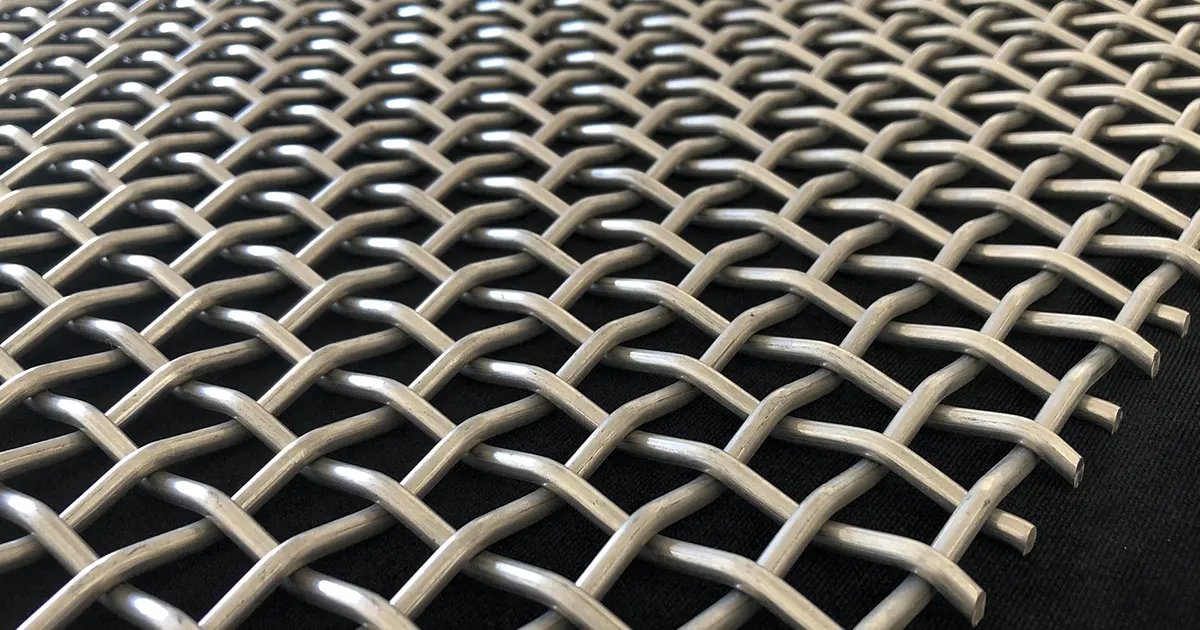
Heavy-duty aggregate processing requires materials that do not fracture when 200kg granite boulders drop from conveyor heights of three meters. Woven wire provides a mechanical advantage because the intersecting wires allow for localized energy dissipation across the entire mesh surface rather than concentrating stress at a single point.
"A 2024 durability study of 50 industrial quarries found that woven high-carbon steel resisted cracking 3.5 times longer than rigid perforated plates when processing high-silica content ore."
This ability to absorb impact ensures that the screening deck remains operational during 24-hour shifts without requiring emergency structural welding. Maintaining structural integrity is necessary for the next stage of production where consistent vibration speeds are required to move heavy material.
Screening machines often operate at G-forces between 4g and 5.5g to ensure that smaller particles separate from the larger heavy-duty rocks effectively. Woven wire is manufactured using a pre-crimping process that locks each wire into a precise position, preventing the mesh from stretching or "walking" under these intense forces.
| Alloy Type | Brinell Hardness | Recommended Aggregate | Typical Lifespan (Hours) |
| High Carbon Steel | 220 - 250 | Limestone, Gravel | 1,200 - 1,500 |
| Oil Tempered Steel | 350 - 400 | Granite, Trap Rock | 2,000 - 2,400 |
| Manganese Steel | 200 (up to 500) | Iron Ore, Basalt | 3,000+ |
High-hardness alloys prevent the abrasive aggregate from grinding down the wire diameter too quickly, which would otherwise lead to a loss of tension. If a screen loses tension, it begins to "whip" against the support bars, causing metal fatigue and eventual breakage within 48 hours of the tension loss.
Properly tensioned woven wire screens stay tight across the machine deck because they are equipped with reinforced hooked edges made from 12-gauge galvanized steel. These hooks allow operators to apply up to 5,000 pounds of tensioning force, ensuring the screen surface remains as flat as possible for even material distribution.
"Data from a 2023 maintenance log across 15 North American mining sites indicated that properly tensioned wire mesh reduced unplanned downtime by 28% compared to modular rubber panels."
Flat screening surfaces ensure that material does not "channel" down the sides of the deck, which would leave the center of the mesh underutilized. Even distribution across the entire width of the screen maximizes the volume of aggregate that can be processed per hour.
Processing volume increases when the open area of the mesh is maximized, a feat that woven wire achieves better than any other heavy-duty medium. While a thick rubber panel might only offer 30% open area, a high-tensile wire screen provides up to 65% open area for the same aggregate size.
A 35% increase in open area allows for a proportional increase in feed rate, meaning a plant can process more tons per hour without buying larger machinery. This efficiency is particularly helpful in 2026 as energy costs for running large vibrating motors continue to rise globally.
Energy efficiency is also improved because the lighter weight of woven wire compared to heavy steel plates reduces the mass that the vibrating motor must move. A standard 5' x 10' woven screen weighs approximately 60% less than a 20mm thick perforated steel plate designed for the same impact load.
"Testing in a mid-sized European quarry showed that reducing deck weight by 150kg resulted in a 9% decrease in amperage draw for the shaker motor while maintaining identical throughput."
Lower amperage draw translates to less heat buildup in the motor bearings, extending the life of the mechanical drive system and reducing long-term maintenance costs. These savings are reinforced by the specific geometry of the weave, which helps prevent the "plugging" of oddly shaped rocks.
Oddly shaped or "near-size" rocks often get stuck in the apertures of rigid screens, but the natural flexibility of wire strands allows them to vibrate independently. This secondary vibration frequency dislodges trapped stones that are within 5% of the aperture size, keeping the screen clear for the next batch of material.
A clear screen surface ensures that the gradation of the final product remains within the strict tolerances required for high-grade concrete or asphalt production. In a 2025 quality control audit, woven wire systems produced a 98.4% pass rate for #4 sieve specifications compared to 91% for synthetic alternatives.
High pass rates eliminate the need for re-screening, which is a costly process that involves transporting material back to the start of the crushing circuit. Avoiding re-screening saves approximately $1.50 per ton in fuel and labor costs for typical large-scale aggregate operations.
The durability of these screens is further enhanced by using "Flat Top" weaving styles, where all the wire knuckles are tucked underneath the screening surface. This creates a completely smooth top side, allowing aggregate to slide across the mesh with minimal friction and zero catch points.
"Field trials on a primary scalper in 2024 demonstrated that Flat Top weaves lasted 25% longer than standard over-under weaves when handling highly abrasive quartz-rich material."
Reduced friction means the wire does not thin out as quickly at the crossover points, which is usually where a screen first begins to fail. By protecting these crossover points, the screen maintains its original aperture size throughout its entire operational life.
Consistent aperture size is the most reliable way to guarantee that the aggregate sold to customers meets international construction standards like ASTM D448. Using reliable woven media ensures that the final product is clean, accurately sized, and ready for use in heavy-duty infrastructure projects.
Put a Pure-I module on your optical bench.
Engineering teams ship vision-enabled products 4× faster with a single SDK across VIS, NIR, SWIR, and MWIR.